
Tserko Ri or Kyanjin Ri: Which Summit Should You Actually Climb in Langtang?
19th May, 2026
- annapurnaencounter
A realistic side-by-side breakdown for trekkers who want the best views — without the guesswork
Table of Contents
You've made it to Kyanjin Gompa. Your legs remember every stone of the Langtang Valley Trek that brought you here. The air is crisp, the yaks are grazing at ridiculous altitudes, and two peaks are staring back at you from across the valley — both promising something unforgettable.
But here's the thing nobody tells you clearly enough: Tserko Ri and Kyanjin Ri are completely different experiences. One is a sunrise warm-up. The other is a full-day physical commitment that will test every bit of acclimatization you've managed so far.
This guide cuts through the noise. By the time you finish reading, you'll know exactly which summit is right for you — based on your fitness, your schedule, and how your body is handling the altitude.
First, Let's Set the Scene: Where You Are
Kyanjin Gompa sits at roughly 3,870 metres in the heart of the Langtang Valley, a high-altitude bowl flanked by glaciers, cheese factories, and some of the most dramatic mountain walls in Nepal. Most trekkers arrive here after three to four days of hiking from Syabrubesi.
This is where your Langtang Valley trek itinerary typically allocates a full rest and acclimatization day — and that day is usually spent doing one thing: climbing.
But which climb you choose matters enormously.
Kyanjin Ri: The One Almost Everyone Can Do
Altitude: ~4,773 metres Time: 3–4 hours round trip (lower viewpoint), 5–6 hours (upper viewpoint) Difficulty: Moderate — steep in places, but manageable for most trekkers
What the Hike Actually Feels Like
You start from the lodge area in Kyanjin Gompa and head directly up the ridgeline to the east. The trail is not complicated — there's essentially one direction: up. The first 45 minutes are deceivingly gentle. Then it gets steep, and stays steep.
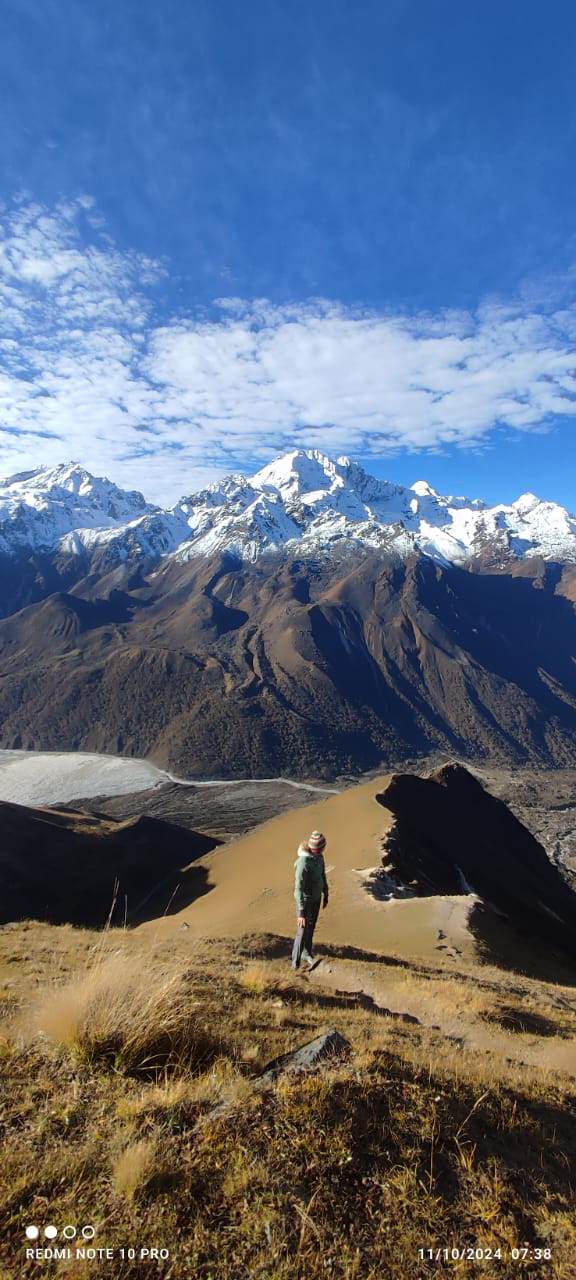
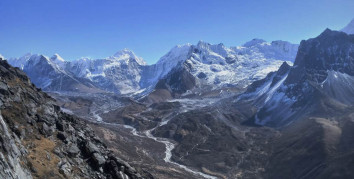
Most trekkers reach the lower viewpoint (around 4,500m) within two hours and call it there. It's rewarding. Langtang Lirung (7,227m) fills the skyline to the north, and the entire valley stretches behind you like a textbook photograph.
Push another hour and you hit the upper Kyanjin Ri viewpoint at roughly 4,773 metres — and that's where the panorama opens properly. Ganesh Himal, Langtang II, the Jugal Himal range — all visible without obstruction.
Why Kyanjin Ri Works as an Acclimatization Hike
The golden rule of high-altitude trekking is climb high, sleep low. Kyanjin Ri altitude is practically designed around this principle. You're back at your lodge before noon, appetite intact, legs tired but not destroyed. It prepares your body without punishing it.
Best for:
- Trekkers on a 7–8 day itinerary with limited flex days
- Anyone who arrived in Kyanjin feeling the altitude
- First-time high-altitude trekkers
- Groups with mixed fitness levels
Tserko Ri: The One That Earns Its Views
Altitude: ~4,984 metres (some GPS readings push past 5,000m) Time: 7–9 hours round trip, full day Difficulty: Strenuous — this is a serious summit day
What the Hike Actually Feels Like
Tserko Ri is not a casual extension of your acclimatization day. Most experienced trekkers will tell you it's the hardest non-technical day hike in the Langtang region — and they're not exaggerating.
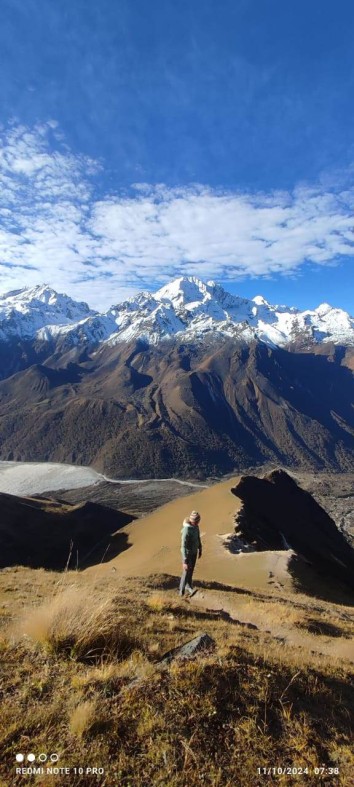
You leave Kyanjin Gompa before first light, typically by 5:00–5:30 AM. The trail heads northwest, climbing relentlessly through loose rock, grassy ridges, and eventually exposed scree near the summit. There is no defined path in the upper sections — you navigate by cairns and instinct.
The reward? Possibly the finest 360-degree panoramic view accessible to non-mountaineers in the entire Langtang range. You're looking at:
- Shishapangma (8,027m) — the only 8,000m peak entirely within Tibet — framed directly to the north
- Langtang Lirung, now at eye level rather than above you
- Dorje Lakpa, Ganesh Himal, and the entire Jugal Himal massif
- The Langtang Glacier spread out below like a cracked mirror
On a clear day, trekkers report seeing as far as the Everest massif to the east. The altitude and the absence of ridgeline obstructions make it genuinely possible.
The Physical Reality
At nearly 5,000 metres, the reduction in available oxygen is significant. If you haven't spent at least two nights above 3,800m before attempting Tserko Ri, your body may not cooperate. Symptoms of mild altitude sickness — headache, nausea, fatigue — are common even in fit trekkers who rushed their acclimatization.
The descent on tired legs, over loose rock, takes longer than most people expect. Budget at least 3–4 hours to come down safely.
Best for:
- Trekkers who've completed a night or two at Kyanjin Gompa
- Those who are fit and have prior high-altitude trekking experience
- Anyone whose primary goal is the highest, most expansive viewpoint accessible on foot
- Photographers and landscape enthusiasts willing to earn their shot
Head-to-Head Comparison
| Factor | Kyanjin Ri | Tserko Ri |
|---|---|---|
| Altitude | ~4,773m | ~4,984m |
| Duration | Half day (3–6 hrs) | Full day (7–9 hrs) |
| Difficulty | Moderate | Strenuous |
| Views | Excellent — valley + Langtang Lirung | Exceptional — 360° panorama incl. Shishapangma |
| Acclimatization needed | 1 night at Kyanjin | Minimum 2 nights recommended |
| Return time | Before noon | Late afternoon |
| Physical toll | Manageable | High — expect fatigue + sore legs |
| Best for | Most trekkers | Fit, acclimatized trekkers |
The Altitude Question: Don't Underestimate Either
Here's what's worth saying plainly: both of these hikes involve real altitude. Kyanjin Ri altitude of 4,773 metres is not a trivial figure — it's higher than Everest Base Camp's staging villages and well into the zone where acute mountain sickness becomes a genuine risk for unprepared trekkers.
Tserko Ri, pushing nearly 5,000m, sits in a category that demands respect. Langtang trek difficulty is often underestimated precisely because the valley approach feels gentle and green. Trekkers who've done Annapurna Base Camp sometimes expect similar conditions — the upper reaches of Tserko Ri will correct that assumption quickly.
Signs you should choose Kyanjin Ri over Tserko Ri:
- You have a headache that's persisted since arriving at Kyanjin Gompa
- You've only spent one night at altitude above 3,800m
- You're feeling breathless doing simple activities like walking between lodges
- You have fewer than two full days at Kyanjin Gompa
Signs you're ready for Tserko Ri:
- You've slept two nights at Kyanjin and feel genuinely good
- You've already done Kyanjin Ri as an acclimatization hike
- You regularly exercise at high intensity and have prior high-altitude experience
- You have a rest day buffered after the climb
Can You Do Both? Yes — and Here's the Smartest Way
If your Langtang Valley trek itinerary allows for two or more nights at Kyanjin Gompa, doing both is the ideal approach — and most seasoned guides will suggest exactly this.
Day 1 at Kyanjin: Hike Kyanjin Ri. Rest in the afternoon. Eat well. Day 2 at Kyanjin: Attempt Tserko Ri with a properly acclimatized body.
This sequencing is not just smart — it's the difference between reaching the Tserko Ri summit feeling strong versus crawling up on fumes.
Best Viewpoints in Langtang: The Honest Verdict
So — which one should you actually climb?
Choose Kyanjin Ri if: You have one acclimatization day, you're new to high-altitude trekking, or you're prioritizing safety over summit bragging rights. The views are genuinely stunning. You will not feel shortchanged.
Choose Tserko Ri if: You've acclimatized properly, you're physically fit, and you want the kind of panoramic summit experience that people are still talking about years later. The climb from Kyanjin Gompa to Tserko Ri is, for many trekkers, the single greatest day of their Himalayan journey.
Choose both if: Your itinerary allows it. Full stop.
Planning Your Langtang Trek? Don't Stop Here.
The Langtang Valley Trek is one of Nepal's most underrated trekking destinations — quieter than the classic routes, arguably more dramatic in its immediate surroundings, and genuinely accessible without the permit complexity of more remote circuits.
But if this comparison has given you a taste for high-altitude viewpoints and summit days, Nepal's other regions offer experiences that are equally — and in some cases more — transformative.
The Everest region gives you proximity to the world's highest peaks, with iconic viewpoints like Kala Patthar offering that silhouette of Everest at sunrise that exists on every trekker's bucket list. The Annapurna circuit and base camp routes deliver dramatic landscape variety — from subtropical forests to high desert plateau — with several summit day options comparable in challenge to Tserko Ri. And the Manaslu circuit, still relatively remote and permit-restricted, offers some of the most raw, unfiltered Himalayan scenery available to trekkers today.
Wherever you go — acclimatize properly, go slow, and let the mountain decide the pace.
Planning a Langtang Valley trek or looking for a customized itinerary that builds in both summit days? Contact Annapurna Encounter we've been guiding trekkers through these valleys since 2014.
Recent From Travel Guide
.jpg)
18th Jan, 2023
_11zon.jpg)
18th Jan, 2023

18th Jan, 2023
18th Jan, 2023

8th Dec, 2023
9th Dec, 2023
.jpg)
11th Feb, 2025
13th Dec, 2023
_11zon.jpg)
18th Dec, 2023
.jpg)
.jpg)
2nd Jan, 2024
3rd Jan, 2024
.jpg)
_11zon.jpg)
_11zon.jpg)
23rd Jun, 2025

24th Jan, 2024
.jpg)
30th Jan, 2024

4th Feb, 2024

5th Feb, 2024
-4.jpg)
6th Feb, 2024
.jpg)

12th Feb, 2024
.jpg)
_11zon.jpg)
18th Feb, 2024
.png)
-1.jpg)
7th Mar, 2024
.jpg)
12th Mar, 2024
13th Mar, 2024
20th Mar, 2024
.jpg)
26th Mar, 2024
-1.jpg)

14th Jan, 2025

14th Jan, 2025
16th Jan, 2025

18th Jan, 2025

20th Jan, 2025

24th Jan, 2025
.jpg)

5th Feb, 2025

5th Feb, 2025
9th Feb, 2025
3rd Apr, 2025
.jpg)
11th Apr, 2025

16th Apr, 2025
20th Apr, 2025
-1.jpg)
.jpg)
27th May, 2025
14th Jun, 2025

15th Jun, 2025
17th Jun, 2025
18th Jun, 2025
19th Jun, 2025
23rd Jun, 2025
24th Jul, 2025
3rd Sep, 2025
.jpg)